
Search engines shape the modern internet. Almost every online journey starts with a search bar. People type a question. People click a result. So, websites fight hard for those valuable top spots. This competition creates a huge opportunity. It also creates a long list of possible mistakes.
Many website owners feel frustrated about their rankings. They publish articles every week. They add pages to their website. They even hire professionals sometimes. Yet the traffic numbers remain low. The problem usually hides inside poor SEO habits.
Search Engine Optimisation helps websites appear in search results. It brings visitors who already want something. This traffic often converts into leads or customers. However, many businesses unknowingly sabotage their own rankings. These mistakes slowly destroy website visibility.
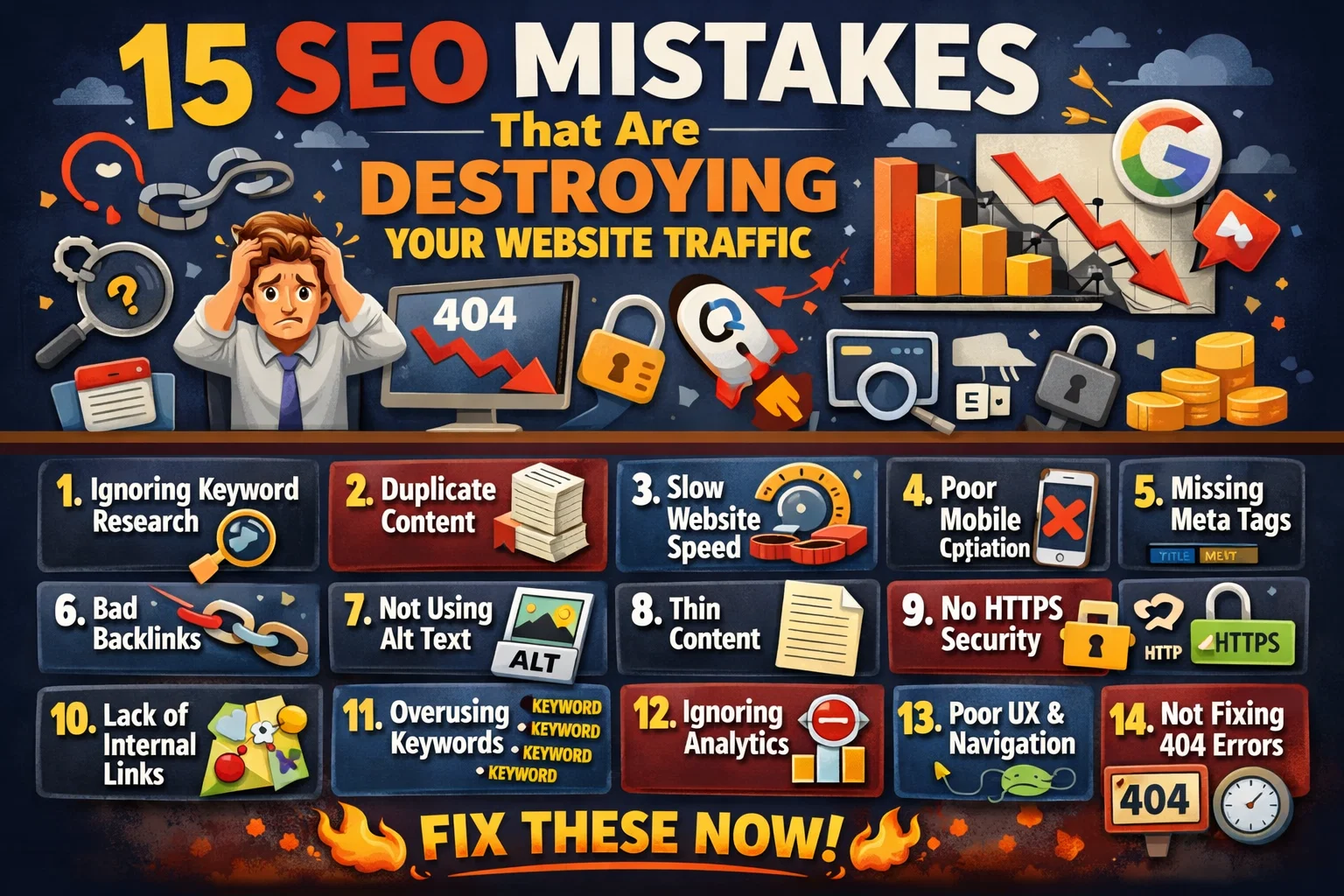
This article explains fifteen common SEO mistakes that might happen even with the best SEO company in Melbourne. Each mistake looks simple. Yet each mistake quietly drains website traffic. So, fixing them can change your online growth completely.
1. Ignoring Keyword Research
Many website owners guess their keywords. This approach rarely works well. People often search using different words.
Keyword research reveals real search behavior. Tools like Google Keyword Planner help discover popular terms. Moreover, they show how difficult each keyword becomes.
Without research, your content targets the wrong audience. You may rank for phrases nobody searches. So, traffic stays low even if rankings improve.
2. Writing Only for Search Engines
Some websites stuff keywords everywhere. The content reads like a robot wrote it. Readers notice this immediately.
Search engines now value user experience strongly. Algorithms from Google reward helpful content. Moreover, they analyze how visitors interact with pages.
Content must feel natural and informative. So, write for humans first. Then place keywords carefully within the text.
3. Forgetting About Search Intent
Search intent explains why someone searches online. Some people want information. Some people want to buy products, while others want quick answers.
Many websites target the wrong intent. For example, a sales page cannot rank well for educational queries. The mismatch confuses search engines.
Understanding user intent improves ranking chances.
4. Publishing Thin Content
Thin content offers little value. These pages contain very few details. They answer questions poorly.
Search engines prefer deep and informative pages. Visitors also enjoy useful information. So, long helpful content performs much better. For example, a 300 word article rarely solves complex problems.
However, a detailed guide builds authority. So, always aim for meaningful content depth.
5. Ignoring Mobile Optimization
Most searches happen on phones today. Mobile users expect fast and smooth browsing.
Google introduced mobile-first indexing years ago. This update means mobile performance matters greatly. Websites that load poorly on phones lose rankings.
Responsive design solves many issues. Moreover, clean layouts improve user experience significantly.
6. Slow Website Speed
People hate waiting online. Even a few seconds feel frustrating.
Slow websites create high bounce rates. Visitors leave before reading the content. Search engines notice this behavior quickly. Tools like Google PageSpeed Insights measure site performance. They also provide suggestions for improvement.
Fast websites create happier users. Moreover, they increase ranking potential significantly.
7. Missing Meta Titles and Descriptions
Meta titles and descriptions appear in search results. These elements attract clicks from potential visitors.
Many websites ignore this simple optimization step. They allow search engines to create automatic snippets.
A strong meta title increases click-through rates. Moreover it tells search engines about page topics clearly.
8. Poor Internal Linking
Internal links connect pages inside your website. These links guide both readers and search engines.
Many websites leave pages isolated. Search engines struggle to understand page relationships. Strong internal linking improves navigation. Moreover, it spreads authority across important pages.
For example, blog posts can link to service pages naturally. This strategy improves overall SEO structure.
9. Ignoring Technical SEO
Technical SEO supports the entire website foundation. Without it, many pages remain invisible. Tools like Google Search Console reveal indexing problems. These issues include broken pages or crawling errors.
Technical SEO also involves clean site architecture. Moreover, proper sitemaps help search engines explore pages easily.
Ignoring these details damages rankings gradually.
10. Using Duplicate Content
Duplicate content confuses search engines greatly. Multiple pages appear identical in meaning. Search engines struggle to choose the correct page. So, rankings often drop for all versions.
Unique content solves this problem quickly. Moreover, original articles build authority in your niche.
11. Ignoring Backlink Quality
Backlinks act like digital votes. Other websites recommend your content through links. However, not all links help your rankings. Low quality backlinks harm credibility.
Search engines value trustworthy sources. For example, links from respected websites improve authority. So, focus on quality rather than quantity.
12. Skipping Image Optimization
Images enrich website content visually. However, large image files slow page loading.
Proper image optimization improves speed. Simple steps include compression and descriptive file names.
Alt text also helps search engines understand images. Moreover, it improves accessibility for visually impaired users.
13. Forgetting Local SEO
Local businesses depend heavily on nearby customers. Local SEO ensures visibility within specific locations.
Profiles on Google Business Profile boost local discovery. Moreover, local keywords help attract nearby searches.
For example, a business targeting Melbourne customers must optimize location signals. Many companies partner with the Best SEO Company in Melbourne to strengthen their local presence.
14. Neglecting Analytics Data
Data reveals how visitors interact with websites. Without data, optimization becomes guesswork. Tools like Google Analytics track visitor behavior clearly. Website owners learn which pages attract attention.
This insight guides smarter decisions. Moreover, it helps identify weak content areas quickly.
15. Expecting Instant Results
SEO works like a long journey. It rarely produces overnight success.
Search engines evaluate websites slowly. Rankings improve through consistent effort.
Many businesses abandon SEO too early. They lose patience during the early months. However, steady improvement eventually delivers strong results.
Businesses often partner with experts for guidance. For example, working with the Best SEO Company in Melbourne helps avoid these costly mistakes. Professional agencies understand algorithm changes. They also apply proven optimization strategies.
Final Thoughts
SEO success depends on many small details. Each mistake described above appears minor at first glance. Yet, these issues combine to weaken website visibility.
Fixing them requires patience and strategy. If the process feels overwhelming, then expert help becomes valuable. Many companies rely on specialists such as Make My Website to guide their digital growth.
Smart SEO choices create powerful long-term results.
