
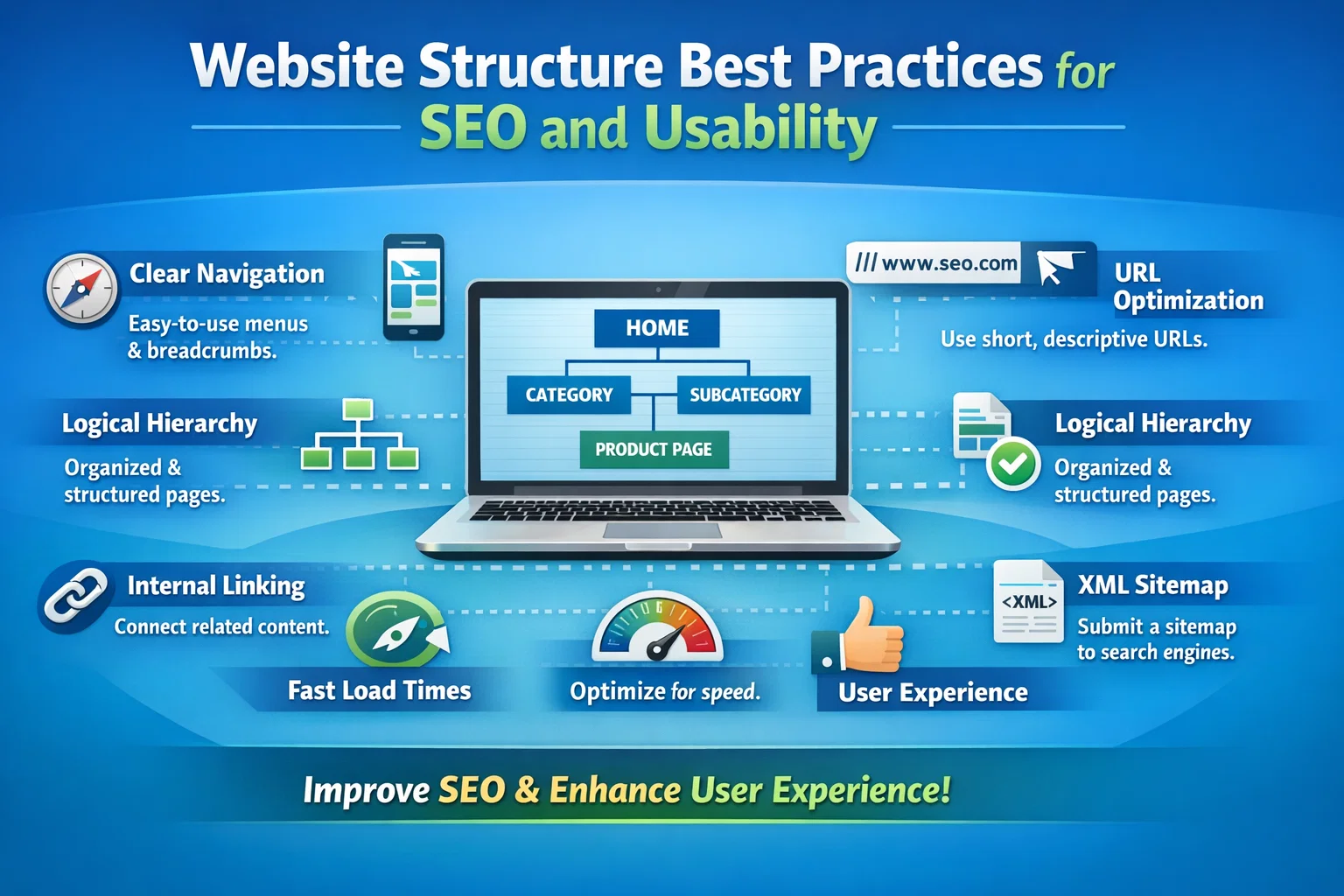
A website needs more than bright colours and stylish graphics. A website also needs a smart structure. Structure works like a road map for visitors. A clear path helps people reach the right page without confusion. Search engines also depend on structure to understand a website. Good organisation improves both usability and visibility online.
Many people studying digital marketing notice this pattern early. Strong structure creates a pleasant experience for visitors. Search engines also reward organised websites with better rankings. Businesses that invest in website design in Melbourne often focus heavily on structure. Designers understand that layout decisions influence user behaviour. So, the structure deserves careful attention from the start.
Why Website Structure Matters
Structure acts like the skeleton of a website. Every page connects to another page through a logical system. Visitors can move easily when that system works well. Confusing paths create frustration and fast exits. That problem harms engagement and search rankings.
Search engines also crawl websites through links and categories. A messy structure makes crawling difficult. Important pages sometimes remain hidden from search engines. A clear hierarchy prevents that issue.
Moreover, a structured website builds trust with users. Many web design experts in Melbourne emphasise navigation clarity for this reason.
Start With a Simple Website Hierarchy
Every good website begins with a hierarchy. Hierarchy shows how pages relate to each other. Think about a pyramid shape. The homepage sits at the top. Main category pages appear below the homepage. Individual pages sit under those categories.
This model keeps information organized. Visitors understand the website within seconds. Search engines also recognize the relationship between pages.
For example, a service website might follow this structure:
- Homepage
- Services Page
- Individual Service Pages
- Blog Section
- Contact Page
This simple layout helps both humans and search engines. Designers who specialize in website design in Melbourne often recommend keeping the hierarchy shallow. A shallow structure reduces the number of clicks needed to reach information.
Keep Navigation Clean and Clear
Navigation guides visitors through the website. Good navigation feels simple and predictable. Visitors should understand menu options instantly. Confusing labels create hesitation.
Clear menu items improve usability immediately. Words should remain familiar and direct. For example, labels like “Services” or “About Us” work better than clever phrases. Creative wording sometimes confuses visitors.
Moreover, navigation should remain consistent across pages. Every page should show the same main menu. Consistency builds comfort during browsing. Visitors learn the layout quickly.
Use Logical URL Structures
URL structure also plays a major role in SEO. Clean URLs look simple and descriptive. Visitors should understand a page before clicking the link.
For example, this URL works well: example.com/services/web-design
This URL clearly shows the topic. Search engines also understand the page quickly. Complicated URLs create confusion. Random numbers or symbols reduce clarity.
Moreover, logical URLs help maintain the site hierarchy. Each level reflects the structure of the website. That clarity supports both SEO and usability.
Experts in website design in Melbourne often recommend short and readable URLs. Short addresses improve sharing across social media platforms. They also appear more trustworthy to visitors.
Build Internal Links Strategically
Internal links connect pages within the same website. These links guide visitors toward helpful information. Internal linking also distributes authority across pages.
For example, a blog article might link to a service page. The service page might link to a contact form. This pathway encourages visitors to explore deeper.
Moreover, internal links help search engines discover content faster. Crawlers follow links to reach new pages. A strong internal network improves indexation. However, links should always feel natural. Forced links interrupt reading flow. Readers appreciate helpful connections between related topics.
Limit the Number of Clicks
Users prefer quick access to information. Too many clicks reduce engagement. Visitors often abandon websites that feel complicated.
A popular guideline recommends the three-click rule. This idea suggests that visitors should reach important content within three clicks. Simple navigation supports that goal.
Moreover, fewer clicks improve user satisfaction. Visitors move smoothly between pages. Fast access encourages deeper exploration.
Designers focusing on modern website design in Melbourne often map user journeys during planning stages. These maps reveal potential obstacles in navigation paths. Removing unnecessary steps improves overall usability.
Organise Content Into Categories
Content categories create order within websites. Categories group related information together. This system helps visitors locate topics quickly. For example, a blog might use categories like:
- Web Design
- SEO Tips
- Digital Marketing
- Business Growth
Each category collects similar articles. Visitors interested in one topic can browse several related posts.
Moreover, categories help search engines understand content themes. Search engines evaluate topical relevance during ranking decisions.
Well-planned categories often appear in successful website designs in Melbourne. Designers align categories with business goals. This approach supports both marketing and usability.
Improve Page Speed Within Structure
Structure also affects page loading speed. Large websites sometimes include heavy scripts or cluttered layouts. Slow pages harm both SEO and usability.
Fast loading pages create better experiences for visitors. Search engines also prioritize fast websites in ranking algorithms. Moreover, organised structure reduces unnecessary elements. Clean code improves performance naturally. Designers remove redundant scripts during development.
Plan Structure Before Designing Pages
Many beginners focus on visual design first. This approach creates problems later. Structure should always come before visual styling.
Planning begins with a sitemap. A sitemap lists all pages within the website. Designers review relationships between pages carefully.
Moreover, a sitemap reveals gaps in content. Teams can identify missing sections early. Fixing issues becomes easier during planning stages. Those studying web design often learn this principle quickly. Structure guides design decisions.
Conduct Usability Testing
Even the best plans require testing. Real users often reveal hidden issues. Usability testing shows how visitors interact with a website.
Test participants perform simple tasks during evaluation. Designers observe how quickly users complete those tasks. Confusion highlights structural problems. Feedback improves navigation and layout decisions.
Small adjustments often increase usability dramatically.
Final Thoughts
Website structure shapes the entire user experience. So, businesses that invest in thoughtful planning often achieve better digital results.
One important lesson here is that good structure supports every other element of a website. Visual beauty and strong content matter. However, structure connects everything together. If you need help implementing this for your website design in Melbourne, feel free to reach out to Make My Website.
