
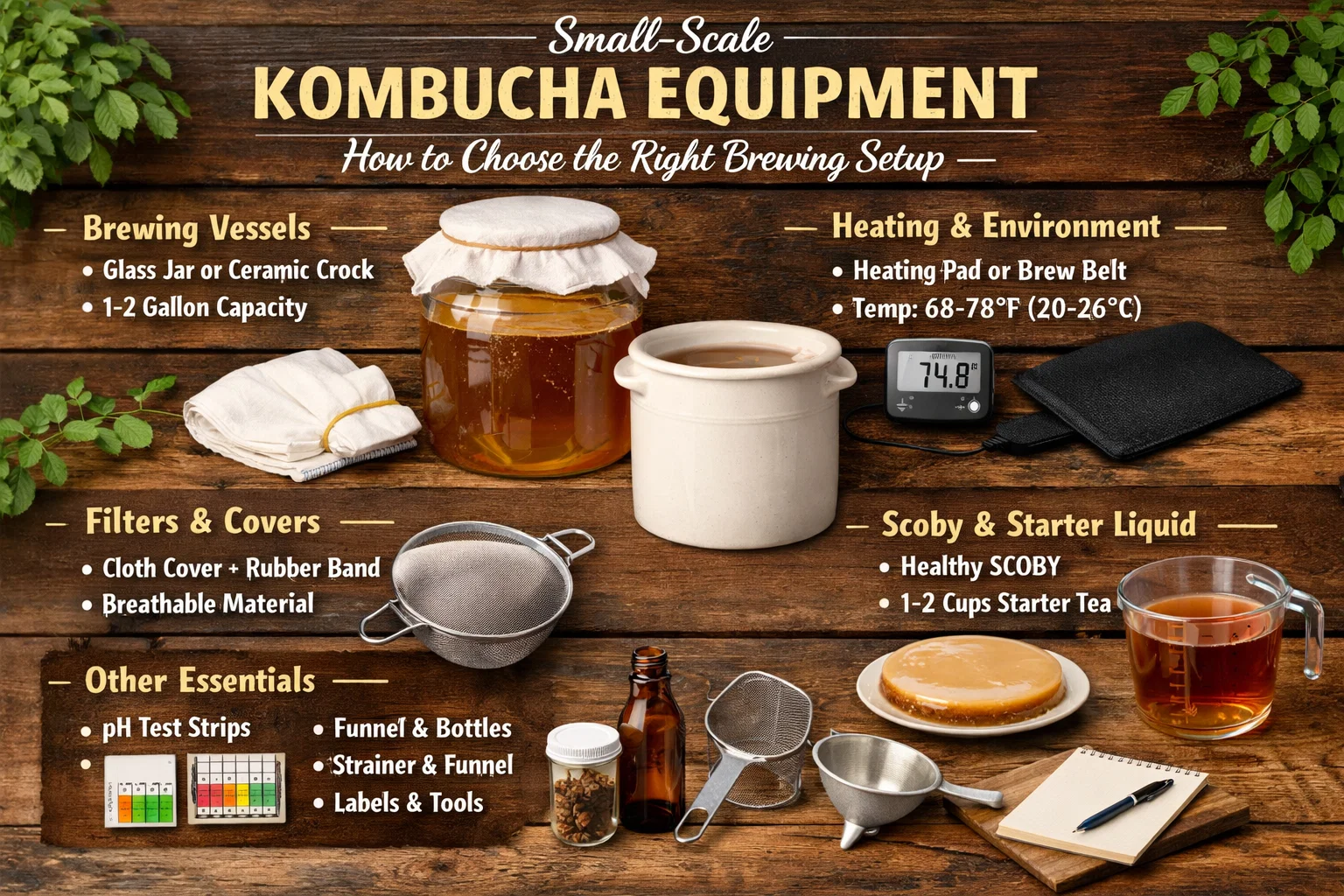
Kombucha has grown from a niche fermented tea into a mainstream beverage enjoyed for its refreshing taste and potential health benefits. As demand continues to rise, more home brewers and small businesses are entering the kombucha market. However, one of the biggest challenges for beginners and growing producers alike is choosing the right small-scale kombucha brewing equipment.
Selecting the proper equipment is not just about capacity it affects product consistency, fermentation control, hygiene, and scalability. Whether you are brewing at home, launching a local brand, or testing a commercial concept, the right setup can make the difference between inconsistent batches and a reliable, high-quality product.
In this comprehensive guide, we will walk through how to choose small-scale kombucha brewing equipment for both home and commercial use, covering key components, system design, and practical considerations.
Understanding the Basics of Kombucha Brewing
Before selecting equipment, it’s important to understand how kombucha is made.
Kombucha is produced by fermenting sweetened tea with a SCOBY (Symbiotic Culture of Bacteria and Yeast). During fermentation, yeast converts sugar into alcohol, and bacteria convert that alcohol into organic acids. This process creates the tangy flavor and probiotic properties that define kombucha.
Unlike beer brewing, kombucha fermentation often requires oxygen exposure during the primary stage. This means equipment selection must accommodate both aerobic and controlled fermentation environments.
Defining Your Brewing Scale
Choosing the right equipment starts with defining your production scale.
Home Brewing
Home brewers typically produce 1–5 gallons per batch. Equipment is simple, affordable, and focused on flexibility.
Small Commercial Production
Small commercial producers may brew 10–100 gallons per batch. At this stage, consistency and efficiency become more important.
Scaling Considerations
Even if you are starting small, it’s important to think about future growth. Choosing equipment that can scale with your production helps avoid costly upgrades later.
Key Equipment for Small-Scale Kombucha Brewing
A kombucha brewing system consists of several core components. Each plays a specific role in the process.
Brewing Kettle or Tea Preparation System
The process begins with brewing tea and dissolving sugar. For small-scale setups, this can be done with simple kettles or dedicated brewing vessels.
Fermentation Vessels
Fermentation vessels are where the magic happens.
Options include:
- Glass jars (common for home brewing)
- Food-grade plastic containers
- Stainless steel tanks (preferred for commercial use)
Because kombucha requires oxygen during primary fermentation, many systems use open or breathable vessels.
Secondary Fermentation Tanks
Secondary fermentation is used for flavoring and carbonation. These vessels are typically sealed and may be pressure-rated.
Filtration and Transfer Equipment
As production grows, filtration and transfer systems help maintain consistency and reduce sediment.
Packaging Equipment
For home brewers, bottling is usually manual. Commercial producers may use semi-automatic or automatic filling systems.
For those looking to upgrade from basic setups, exploring integrated kombucha brewing equipment solutions can provide a more efficient and scalable approach.
Choosing the Right Fermentation Vessel
Fermentation vessels are the most important component in kombucha production.
Open Fermentation vs. Closed Systems
- Open fermentation allows oxygen exposure but increases contamination risk
- Closed systems provide better control but require airflow management
Many small-scale producers use open vessels initially and transition to controlled systems as they grow.
Material Considerations
- Glass is ideal for small batches but not scalable
- Plastic is affordable but less durable
- Stainless steel is the best option for long-term use
Stainless steel tanks are resistant to acidity and easy to clean, making them ideal for kombucha production.
Temperature Control and Environmental Factors
Temperature plays a critical role in fermentation.
Kombucha typically ferments best between 68°F and 78°F (20°C–26°C). Maintaining a stable environment ensures consistent flavor and fermentation speed.
For small-scale setups, temperature can be controlled using:
- Heating mats
- Insulated spaces
- Basic temperature controllers
As production grows, more advanced systems such as glycol cooling may be required.
Sanitation and Cleaning Requirements
Cleanliness is essential in kombucha brewing, but it must be balanced carefully.
Unlike beer brewing, kombucha relies on beneficial bacteria. Over-sanitizing can disrupt this balance, while under-cleaning can introduce harmful contaminants.
Best practices include:
- Cleaning equipment after every batch
- Using food-safe cleaning agents
- Avoiding harsh chemicals
- Maintaining a clean brewing environment
Proper sanitation ensures consistent results and reduces the risk of batch failure.
Automation and Efficiency for Small Producers
While many small-scale brewers start with manual processes, automation becomes valuable as production increases.
Benefits of Automation
- Improved consistency
- Reduced labor
- Faster production cycles
Automation can include temperature control, mixing systems, and filling equipment.
For growing businesses, reviewing systems like craft beverage equipment systems can help identify scalable solutions that improve efficiency.
Budget Considerations
Cost is a major factor when choosing kombucha equipment.
Typical Cost Ranges
- Home setups: $100–$1,000
- Small commercial setups: $1,000–$20,000
- Advanced small-scale systems: $20,000+
While it may be tempting to minimize upfront costs, investing in quality equipment often reduces long-term expenses.
Planning for Future Growth
Many kombucha producers underestimate how quickly demand can grow.
To prepare for expansion:
- Choose scalable equipment
- Leave space for additional tanks
- Invest in flexible systems
- Plan for increased packaging capacity
A forward-thinking approach helps avoid disruptions as your business grows.
Common Mistakes to Avoid
When selecting kombucha equipment, avoid these common mistakes:
- Choosing equipment that is too small
- Ignoring material quality
- Overlooking sanitation requirements
- Failing to plan for scaling
- Using equipment not suited for acidic liquids
Avoiding these pitfalls can save time, money, and frustration.
Integrating Kombucha into Beverage Businesses
Many breweries and beverage companies are adding kombucha to their product lines.
This diversification allows businesses to:
- Reach new customers
- Expand product offerings
- Increase revenue streams
Using compatible equipment systems makes integration smoother and more efficient.
Conclusion: Building a Reliable Kombucha Brewing System
Choosing the right small-scale kombucha brewing equipment is a critical step in producing consistent, high-quality kombucha. From selecting fermentation vessels to managing temperature and sanitation, every decision impacts the final product.
Whether you are brewing at home or launching a small commercial operation, investing in the right equipment ensures better results and supports future growth.
For businesses looking to expand into kombucha or improve their beverage production systems, Micet’s equipment products offer a reliable and scalable solution. With strong engineering, customizable designs, and durable construction, Micet provides equipment that supports both small-scale and commercial producers in achieving long-term success.
FAQs
1. What is the best fermentation vessel for kombucha?
Stainless steel tanks are the best option for long-term use due to their durability, resistance to acidity, and ease of cleaning.
2. Can I start a kombucha business from home?
Yes, many successful kombucha businesses start from home. However, scaling up requires proper equipment and compliance with local regulations.
3. Is automation necessary for small-scale kombucha production?
Automation is not required at the beginning, but it becomes increasingly important as production grows and consistency becomes a priority.
