
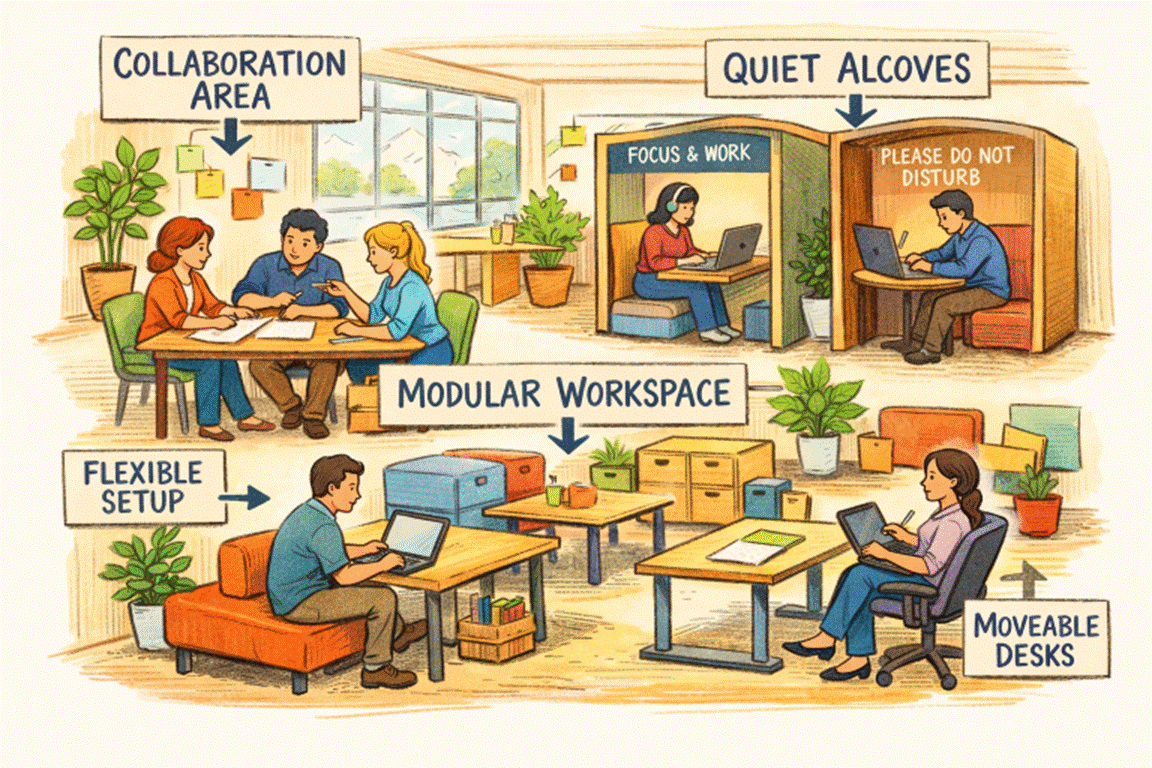
Modern businesses face ever-changing demands that require agility and innovative thinking. To meet these challenges, many organizations are turning to commercial space design specialists to create flexible workspace solutions. These environments allow companies to accommodate a variety of work styles and tasks, ensuring productivity and employee satisfaction remain high even as business needs shift over time. The transition from traditional static offices to dynamic, adaptable layouts has become a central strategy for organizations seeking to thrive in the current landscape.
Flexible workspace design not only redefines the aesthetics of a modern office but also transforms culture, boosts morale, and offers practical financial benefits. With thoughtfully designed areas that can be reconfigured for solo work, brainstorming sessions, or group meetings, employees have more control over where and how they work. This adaptability can significantly enhance workforce efficiency and well-being, driving business results and fostering a positive corporate environment.
Moreover, companies embracing flexible design are often better prepared for future disruptions or changing staffing needs. With agility at the forefront, businesses can efficiently scale, optimize real estate investments, and keep employees engaged. These changes may seem straightforward, yet their impact on company culture and bottom lines is significant, illustrating why so many leaders are making the shift to tailored, future-ready spaces.
The benefits of flexible workspace design are not just theoretical. Industry research and case studies published by sources like Forbes and Harvard Business Review demonstrate real-world gains in both business performance and employee engagement. As companies look to remain competitive in the years to come, investing in adaptable environments has become a gold standard for smart office management.
Increased Productivity
By giving employees the autonomy to select the environment where they perform best, organizations can tap into higher levels of output. Some individuals thrive in quiet, private settings when focusing on complex assignments, while others are energized by interactive spaces designed for collaboration. Flexible designs blend these needs seamlessly. When a workspace is customizable, overall productivity rises because employees are no longer boxed into a one-size-fits-all scenario. According to a Harvard Business Review study, organizations with flexible workspaces reported higher task completion rates and lower team stress.
Enhanced Employee Satisfaction
Workplace satisfaction is deeply connected to employee choice and comfort. Flexible designs empower team members to choose settings that match their immediate needs, whether they require solitude for concentration or an open setting for creative brainstorming. When employees feel heard and their preferences are accommodated, morale improves, and turnover rates drop. The culture of trust and respect fostered by these designs translates into increased job loyalty and a stronger employer brand, making recruitment and retention far easier in competitive talent markets.
Scalability and Adaptability
Organizations are rarely static. Whether facing periods of rapid growth or downsizing, the physical workspace must keep pace with real-time business needs. Flexible layouts allow for rapid expansion or contraction, without requiring massive overhaul or costly renovations. In industries with fluctuating project demands, this adaptability is especially valuable. Companies can swiftly shift or repurpose areas, integrating new staff or technologies while minimizing operational disruptions. This agility is key in volatile markets where conditions change quickly.
Efficient Space Utilization
A significant downside to traditional offices is the prevalence of unused or underutilized space, which drains resources. Flexible workspace design incorporates modular furniture, movable partitions, and multi-use zones that enable optimal use of every square foot. By continuously assessing and adjusting how space is used, organizations not only save on unnecessary real estate expenses but also create inviting work environments that support multiple activities and purposes. This approach leads to a leaner, more efficient workplace, maximizing the value of property investments.
Cost-Effectiveness
The financial advantages of flexible office design are clear. By reducing underutilized areas and adapting to business needs without ongoing construction costs, companies minimize overhead. Money saved can be redirected into growth strategies, employee development, or new technology, driving competitive advantage. Over time, organizations that optimize their workplaces for flexibility consistently report lower facilities costs and better long-term returns, supported by findings from Inc.
Future-Proofing the Workplace
Looking ahead, the trends shaping how and where we work are still evolving. Organizations that prioritize flexible workspace design are positioned to pivot as new technologies, work models, or global disruptions arise. This readiness makes companies more resilient, competitive, and attractive to top talent who value choice and adaptability. By creating a culture of innovation through design, businesses safeguard their operations and ensure growth, regardless of what the future holds.
In summary, flexible workspace design is not just about aesthetics. It is a strategic investment that elevates productivity, boosts satisfaction, enables scalability, ensures efficient use of office space, delivers cost savings, and prepares organizations for the future. Companies that want to thrive in an ever-changing business world are investing in adaptable offices, and the benefits are broad and lasting for both people and profits.
