
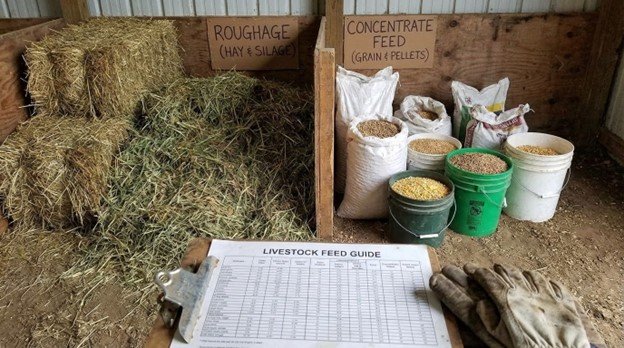
Most livestock health problems don’t start in a vet clinic. They start at the feed bunk.
A dairy cow stops milking well. A beef steer goes off feed. A flock of sheep looks dull and sluggish. Nine times out of ten, the first question a good animal nutritionist asks is: what are you feeding, and what’s the roughage-to-concentrate ratio?
Here’s the reality: most farmers know they need some hay and some grain. But very few understand why or what actually happens inside an animal when that balance is off. And that gap in knowledge costs money. According to the Food and Agriculture Organization (FAO), feed costs account for up to 70% of total livestock production expenses, making it the single largest cost in raising animals. Getting the feed mix wrong doesn’t just hurt your animals it hits your bottom line hard.
This guide breaks down exactly what roughage and concentrate feeds are, how they work differently inside your livestock, and how to use both to your advantage whether you’re managing a commercial cattle operation or a small backyard farm.
What Is Roughage Feed, and Why Does It Matter?
Roughage sometimes called forage is any feed with a crude fiber content above 18% of dry matter and a maximum total digestible nutrients (TDN) value of around 70%. That definition comes straight from the National Research Council (NRC), the gold-standard body for animal nutrition science in the U.S.
Think of roughage as bulky, fibrous plant material: hay, pasture grass, silage, straw, corn stalks (stover), and legumes like alfalfa and clover. These feeds are the backbone of most ruminant diets and for good reason.
According to Oregon State University’s Applied Animal Nutrition program, roughages make up over 50% of all feedstuffs fed to livestock animals in the United States. That’s not a coincidence. It reflects the biology of ruminants.
What Does Roughage Actually Do Inside the Animal?
When a cow or sheep chews roughage, it stimulates rumination that chewing-cud behavior you’ve seen cattle doing under a tree. Rumination produces large volumes of saliva, which buffers acid in the rumen and keeps the rumen pH in its healthy range of 6.5–7.0. Long fiber particles also physically stimulate the rumen wall, keeping it motile and healthy.
Without enough roughage:
- Saliva production drops
- Rumen pH falls
- Microbial populations shift toward acid-producing bacteria
- Digestive disorders like rumen acidosis set in
The three main forms of roughage are:
- Dry roughage hay, straw, artificially dehydrated forage
- Silage fermented grasses, alfalfa, sorghum, or corn preserved anaerobically
- Pastures living grasses and legumes grazed directly
High-quality alfalfa hay, for instance, should have over 18% crude protein, less than 32% acid detergent fiber (ADF), and a relative feed value (RFV) above 130 to be considered genuinely nutritious for lactating animals (ScienceDirect, Roughage Overview).
What Are Concentrate Feeds, and When Are They Needed?
Concentrate feeds are the opposite end of the feed spectrum. By definition, concentrates contain less than 18% crude fiber and 60% or more total digestible nutrients (TDN) on a dry matter basis (Kartik et al., 2022, as cited in ResearchGate). They are dense in energy, protein, or both and they are easily digestible.
Common examples include:
- Energy concentrates: corn, barley, oats, wheat, molasses
- Protein concentrates: soybean meal, cottonseed meal, canola meal, fish meal
The FAO classifies concentrates into two main types: those high in energy (cereal grains and milling by-products) and those high in protein, defined as having over 20% crude protein.
Concentrates are the performance tool of livestock nutrition. They are used when:
- Animals have elevated energy demands (late-stage pregnancy, peak lactation, rapid growth)
- Forage quality is poor and needs supplementing
- You are running an intensive production system (feedlot, commercial dairy)
In intensive beef finishing systems, concentrates can make up 70% or more of the diet dry matter. In dairy systems during peak lactation, they often represent 30–50% of intake (FAO, Livestock Production Systems and the Environment).
What Is the Core Difference Between Roughage and Concentrate?
Let’s be direct about this. The difference isn’t just about fiber vs. grain. It’s about how each feed interacts with the digestive system especially in ruminants like cattle, sheep, and goats.
| Feature | Roughage | Concentrate |
| Crude fiber content | Above 18% DM | Below 18% DM |
| Total digestible nutrients (TDN) | Up to ~70% | 60–90%+ |
| Energy density | Low | High |
| Protein | Low to moderate | Moderate to high |
| Primary function | Rumen health, gut motility | Energy, protein for production |
| Examples | Hay, silage, pasture, straw | Corn, soybean meal, barley, molasses |
| Best suited for | Ruminants (cattle, sheep, goats) | All livestock, especially monogastrics |
As Encyclopædia Britannica classifies it: animal feeds fall into concentrates (high in energy value) and roughages (pasture grasses, hays, silage, straw, and stover). It’s a classification based on nutritional composition and fiber content not just appearance or texture.
Can Animals Survive on Just One Type of Feed?
No and here’s why that matters practically.
What Happens When You Feed Too Much Concentrate?
This is where it gets serious. When cattle receive excessive concentrate without adequate roughage, the rumen fills with rapidly fermentable starch. The rumen microbes produce volatile fatty acids faster than the rumen can absorb them, rumen pH drops below 5.5, and you have rumen acidosis.
The Cattle Site describes it clearly: rumen acidosis occurs when the pH falls below 5.5 (normal is 6.5–7.0). In severe cases, acid is absorbed through the rumen wall into the bloodstream, causing metabolic acidosis which can lead to shock and death.
Dr. Kelli Shoemake, a large animal veterinarian at Texas A&M University’s College of Veterinary Medicine, puts it plainly: “Overindulgence in rapidly fermentable feeds causes a shift from healthy microbial fermentation byproducts to unhealthy byproducts, especially lactic acid. Once the rumen becomes acidic at a severe level, other systemic symptoms develop.”
These symptoms include bloating, profuse diarrhea, lameness, liver abscesses, and in acute cases, death. A 2025 review published in Frontiers in Veterinary Science found that high-concentrate diets significantly diminish salivary secretion, reduce rumen buffering capacity, and create conditions favorable for rumen foam all of which worsen acidosis.
Subacute ruminal acidosis (SARA) a milder but chronic version is especially insidious. SARA occurs when rumen pH drops below 5.6 for more than three hours per day. Cows with SARA show reduced feed intake, mild diarrhea, decreased milk fat, and laminitis. Because the signs are vague, many farmers miss it entirely until production tanks.
What Happens When Roughage Is Insufficient for Monogastric Animals?
Pigs and poultry have a limited ability to digest fiber to begin with, so roughage plays a very different role for them. As noted in Agriculture Institute’s feed classification guide, roughage in monogastric diets is included mainly for gut health rather than nutritional contribution. Take it away entirely and you can see issues with intestinal motility and gut microbiome balance, but these animals clearly need far less roughage than ruminants.
How Do You Balance Roughage and Concentrate in Cattle Feed?
This is the practical question every livestock farmer wants answered.
There is no single universal ratio, but there are solid research-backed benchmarks:
- Dairy cows in early lactation: A roughage-to-concentrate ratio of roughly 3:1 to 5:1 is commonly recommended. As lactation progresses and energy demands change, this can be adjusted.
- Beef finishing (feedlot): SDSU Extension’s research shows that the most common roughage inclusion in finishing diets is 8–10% of diet dry matter just enough to maintain rumen function without sacrificing energy density.
- Transition cattle (moving to high-concentrate diets): Bacteria that digest forages are different from those that digest concentrates. This transition takes 2–3 weeks, during which roughage should be reduced gradually to prevent acidosis (BeefResearch.ca).
Dr. Robert Shaver, Professor of Dairy Science at the University of Wisconsin-Madison, has noted in extension materials that effective fiber specifically fiber from long particles is critical in dairy rations because it drives chewing time, saliva production, and rumen buffering. It’s not just how much roughage you feed, but the physical form of the fiber that matters.
SDSU Extension’s research on finishing cattle also makes an interesting point: feeding a few extra percentage points of roughage even if it slightly reduces theoretical peak gain can actually improve net profitability by reducing digestive upset and feed sorting. Consistency in feed intake matters more than chasing the highest-energy ration possible.
Does the Type of Roughage Matter?
Yes, significantly. Not all roughage is equal, and treating hay as a generic category is a mistake.
- Alfalfa hay is a legume hay rich in protein (15–25% crude protein), calcium, and vitamins. It’s particularly valuable for lactating dairy animals and growing stock.
- Grass hays (bermuda, timothy, ryegrass) are lower in protein but adequate when paired with the right concentrates. A good grass hay should have over 16% crude protein and a relative feed value of 115% or better.
- Silage is fermented forage preserved anaerobically. It retains high moisture content (typically 60–70%) and nutrients that are often lost in dry hay.
- Straw is low in nutrients and used mainly as a fiber source or bedding. It should not be the primary roughage in a productive animal’s diet.
The stage at which forage is harvested matters enormously. According to ScienceDirect’s roughage overview, energy content, digestibility, and palatability all decrease as a plant matures. Younger, actively growing grass delivers significantly better nutritional value than overgrown, stemmy material.
A Quick Guide: Roughage vs. Concentrate by Animal Type
Cattle (ruminants): Roughage is the diet foundation. Concentrates supplement for production goals. Never go below 8% roughage in a high-grain finishing diet.
Sheep and Goats (ruminants): Similar to cattle but generally more efficient at extracting nutrition from roughage. Quality legume hay is especially beneficial during lactation.
Pigs (monogastrics): Primarily concentrate-based diets. Some fiber from roughage aids gut health but is not a significant energy source.
Poultry (monogastrics): Almost entirely concentrate-based. Roughage is not a practical energy source for birds due to their limited fiber digestion capacity.
Horses: Roughage is critical. A minimum of 1.0 kg of long-stem forage per 100 kg body weight per day is recommended by ScienceDirect. Horses on low-roughage, high-grain diets show significantly higher rates of hindgut acidosis, colic, and gastric ulcers.
Common Questions About Animal Feed
Q: What is the main difference between roughage and concentrate? Roughage is high in fiber (above 18% crude fiber in dry matter) and low in total digestible nutrients. Concentrate is low in fiber and high in total digestible nutrients meaning more energy and protein per pound. Both are essential in a balanced livestock diet.
Q: Can you feed cattle concentrate without any roughage? No. Cattle fed concentrate without adequate roughage face a serious risk of rumen acidosis a condition where rumen pH drops dangerously low, causing digestive failure, laminitis, liver abscesses, and potentially death.
Q: What’s a good roughage-to-concentrate ratio for dairy cows? It varies by stage of lactation. Early lactation generally calls for a roughage-to-concentrate ratio of 3:1 to 5:1. This can shift as milk production changes and energy demands fluctuate through the lactation cycle.
Q: Is silage considered roughage or concentrate? Silage is roughage. It is fermented forage typically grass, corn, or alfalfa with a crude fiber content above 18% of dry matter. It counts as the primary roughage source in many dairy and beef systems.
Q: What happens if a cow eats too much grain? Grain overload leads to rumen acidosis. The Merck Veterinary Manual describes consequences ranging from simple indigestion to rapidly fatal acidemia. Rumen pH can drop below 5.0 in severe cases, leading to cardiovascular collapse and death.
The Bottom Line
Getting the roughage-concentrate balance right is not complicated once you understand the biology. Roughage keeps the rumen working. Concentrate drives production. You need both and the ratio shifts depending on species, age, production stage, and the quality of your forage.
What the best livestock producers have in common is this: they know their feeds, they test their forages, and they don’t treat either roughage or concentrate as a fixed constant. They treat it as a variable they can actively manage.
At Midsouth Feeds, we help farmers build practical feeding programs grounded in real animal nutrition not guesswork. Whether you’re formulating animal feed rations for a commercial dairy herd or selecting the right cattle feed supplement for your beef operation, the principles in this guide apply directly to what we help you accomplish.
As Dr. Shoemake puts it: “Ruminants can typically consume 0.5% of their body weight in grain without complications once acclimated to that, more grain can be added slowly to the desired consumption level.” Slow, deliberate, and informed. That’s how feeding programs should be built.
