
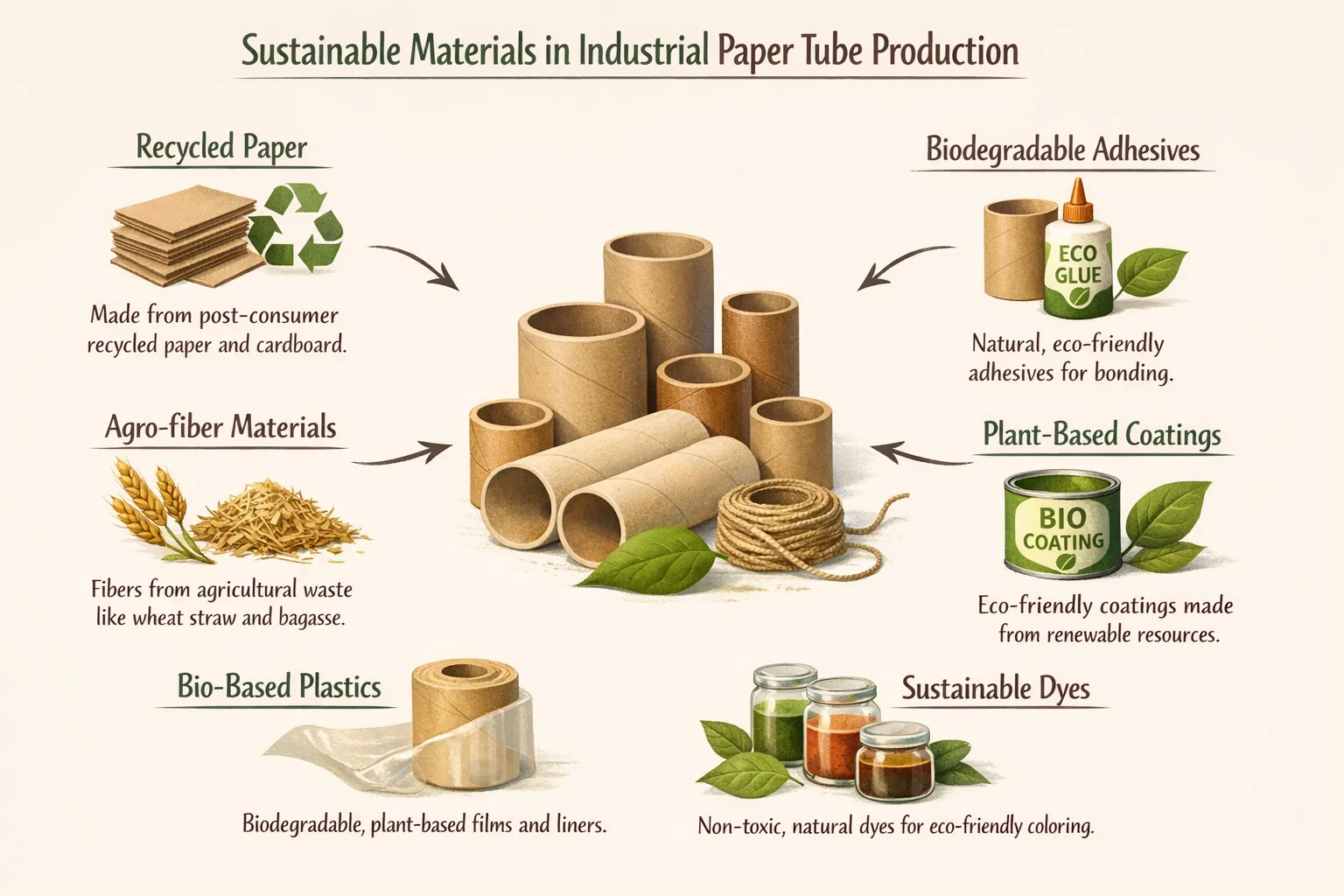
Paper tube manufacturers use sustainable materials to support production and reduce material waste. Reprocessed paper fibers add structure to an industrial paper tube, and layered construction helps maintain strength for demanding applications. Since material selection affects both performance and resource use, production methods prioritize durability and optimal fiber utilization. Here is more information about sustainable materials in industrial paper tube production:
Recycled Fibers
Sustainable industrial paper tube production starts with recycled fiber that supports both performance and material recovery. Construction tube manufacturers use recycled paperboard to reduce reliance on virgin materials, and fiber grades should align with the strength requirements of each application. Because different products require different levels of durability, fiber selection affects tube structure, consistency, and end-use performance. Supplier partnerships also help manufacturers secure recycled materials that align with production goals.
Renewable Materials
Integrating renewable raw materials into products makes paper tube production sustainable. Some manufacturers choose renewable materials that are recyclable after consumer use. By using materials that can re-enter the production cycle, manufacturers reduce reliance on non-renewable materials. This helps minimize waste and support environmental protection efforts. These practices lower the environmental footprint of each product, and they encourage industry-wide adoption of more sustainable sourcing methods.
Layered Tube Construction
Multi-ply construction in paper tube manufacturing provides strength and resilience for industrial use. Rolling multiple layers of paperboard together achieves the wall thickness and rigidity needed for durable products. Controlled, uniform layering also helps reinforce tube integrity for film cores and similar applications. Specifying custom constructions supports sustainable design by matching each tube to its application.
Collaboration between designers and film core producers helps improve raw material utilization. When manufacturers understand various core applications and specifications, they can adjust production methods to optimize resources. This prevents unnecessary overbuilding. Producing film cores rated for a range of maximum line speeds helps match the product to the process; this reduces potential inefficiencies and waste.
Reusable Yarn Carriers
Specialized paperboard yarn carriers are designed to maintain the thread’s shape during transport while delivering durable performance in textile manufacturing. With polished, even surfaces, these carriers minimize damage or fraying, and this supports consistent performance during manufacturing. The inner and outer paperboard liners have high wear resistance. Because of this, yarn carriers are often reusable after spinning and dyeing processes, supporting material recovery and product sustainability.
Producers that also use recycled content in high-performance products support circular resource utilization. Yarn winding cores are designed to align with the material, production processes, and how the cores will be handled. Exact dimensions and spiral or convolute construction allow yarn carriers to match winding requirements across different fiber production operations.
Explore Industrial Paper Tube Manufacturing
Using recycled fibers and renewable materials in tube construction supports product sustainability. Manufacturers can customize wall thickness to suit different industry applications, improving the efficiency of raw material use in production. By sourcing from producers that follow sustainable practices, manufacturers obtain materials that meet both environmental and durability standards. Contact a paper tube manufacturer today to learn more about custom products.
